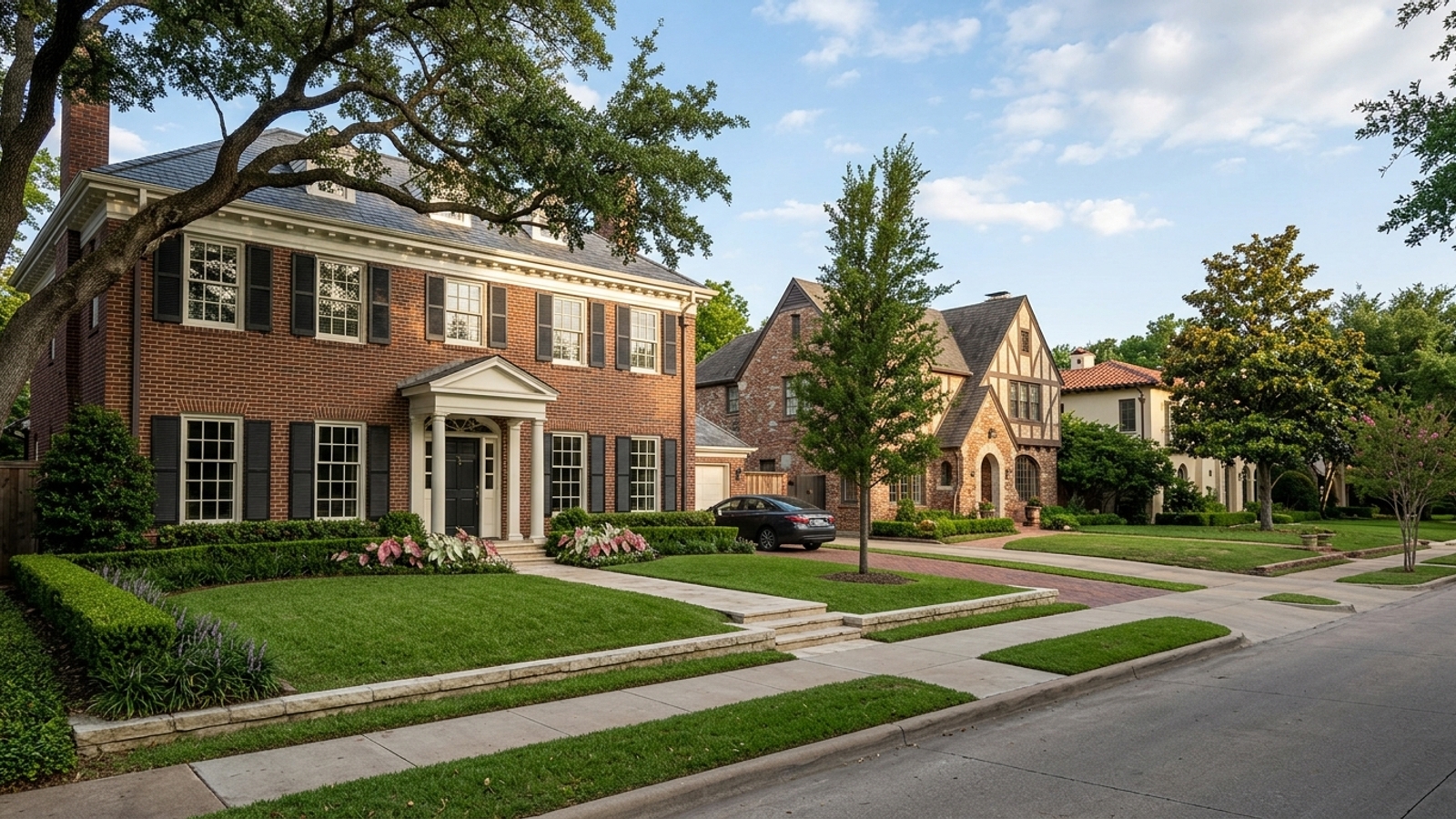
The median sale price in Highland Park, TX currently sits around $2,998,000, making it one of the priciest markets in North Texas. At this price point, even a fraction of a percentage point on a home loan dramatically alters a buyer's monthly obligation, especially for first-time home buyers in Highland Park.
Financing a multi-million-dollar property in Dallas County requires understanding more than just a headline number on a news site. Buyers and sellers alike should know how daily market shifts affect local demand, which loan types make the most sense, and why working with a local professional often beats a national bank.
Where to Find Accurate Daily Rates in Dallas County
Mortgage rates move every day, sometimes multiple times a day, based on bond markets and broader economic indicators. A rate you see advertised on a Tuesday morning might not exist by Tuesday afternoon.
Many buyers start with national financial portals, which display broad averages built around ideal borrower profiles. That's not the number a lender will offer you. To see your real rate, you need a same-day quote or a formal Loan Estimate, documents that factor in your specific credit score, down payment, and the property type you're buying.
The Forces Behind Daily Rate Shifts
Lenders tie their home loan pricing to the mortgage-backed securities market. When investors demand higher yields on those bonds, lenders push consumer rates up to match.
Economic reports, inflation data, and Federal Reserve policy all drive investor behavior. Because those indicators update constantly, lenders adjust their pricing sheets daily to protect their margins.
How Rate Changes Impact Your Buying Power
Highland Park homes recently averaged about 50 days on the market, which gives buyers some room to think. But waiting has a cost if financing costs drift upward during your search.
A half-percent shift changes your monthly obligation by hundreds of dollars on a high-value property. As borrowing costs rise, the maximum loan you qualify for shrinks, and some houses that were in your budget quietly stop being in your budget.
For illustration only, consider a $2.5 million loan. At 6%, the principal and interest payment runs roughly $14,988 per month. At 6.5%, that climbs to $15,801, over $800 more each month, without buying any additional house.
The Trade-off Between Price and Borrowing Costs
Some buyers sit on the sidelines waiting for rates to fall and make luxury homes more affordable. Here's the problem with that strategy: when rates drop, more buyers enter the market, increasing competition for the 29 or so homes currently in Highland Park's active inventory. That pressure tends to push sale prices higher.
You have to weigh the appeal of a lower monthly payment against the real possibility of paying a higher purchase price in a more crowded market. There's no guaranteed win either way.
How Loan Types Shape Your Monthly Payment
Not all mortgage products are priced the same. Lenders factor in repayment duration and the risk the loan carries, so your choice of structure matters as much as the rate itself.
Most buyers choose a 30-year fixed loan for the predictability of a payment that never changes. A 15-year fixed loan comes with a lower interest rate, but the compressed repayment schedule means a higher monthly outlay. Highland Park buyers also explore government-backed options like FHA or VA loans, which carry distinct pricing models and come with specific property and loan-limit requirements.
Fixed vs. Adjustable-Rate Mortgages
A fixed-rate mortgage locks in your interest for the entire life of the loan. Your principal and interest payment doesn't move, regardless of what the broader market does. That's a real advantage when economic conditions are hard to predict.
An adjustable-rate mortgage offers a lower initial rate for a set introductory period, typically five to ten years. After that window closes, the rate adjusts annually based on market indexes. Your payment can go up if conditions worsen, so this structure suits buyers with a clearly defined short-term horizon better than those planning to stay for decades.
Ways to Secure a Lower Rate Before You Buy
Your financial profile is the thing a lender looks at first, and you have more control over it than most buyers realize. The right preparation, started well before you submit an application, can meaningfully change what you're offered.
Credit score is the single largest pricing factor. Borrowers with higher scores see the most favorable terms; lower scores trigger adjustments that increase the cost of the loan. A larger down payment reduces the lender's risk, which can also translate into a better offer. And buyers can pay discount points, an upfront fee paid at closing, to permanently buy down the interest rate on their loan.
Using a Rate Lock
Once you have a signed purchase agreement, you can generally lock your terms. A rate lock guarantees your borrowing cost for a specific window, usually 30 to 60 days, while you finalize the purchase. So if the market moves against you before closing, you're protected.
If your closing timeline runs past the lock period, lenders will typically charge a fee to extend the guarantee. Worth factoring that into your planning early.
Choosing a Local Lender Over a National Call Center
Highland Park homes sell for about 95% of their list price on average. A transaction at that price level doesn't leave much room for a financing partner who's hard to reach or unfamiliar with how Dallas County deals close.
National banks and online lenders handle high application volumes across the country, operate on standard business hours, and often don't understand the nuances of the North Texas luxury market or Dallas County property taxes. Local mortgage lenders and brokers work in this market every day. They know the local appraisal process, they understand closing timelines, and they have a strong personal incentive to close on time. Their reputation with local real estate agents depends on it.
Comparing Lender Types
Direct lenders fund loans from their own credit lines, giving them full control over underwriting. That tends to mean faster approvals and more flexibility if something unexpected comes up during escrow.
Mortgage brokers work differently. They shop your application across multiple wholesale lenders to find the best available terms. Credit unions and regional banks may offer portfolio loans with unique guidelines, keeping the debt on their own books rather than selling it to investors. Each structure has a place depending on your situation.
What Moving Rates Mean for Highland Park Sellers
With roughly 2.5 months of supply currently available, Highland Park leans slightly toward a seller's market. Even so, borrowing costs directly shape how many qualified buyers can afford your asking price.
When rates spike, some buyers pause their search or shift focus to lower price tiers. Fewer buyers means fewer showings and longer days on market for active listings. The right response isn't to ignore the environment. It's to price based on current market data and recent comparable sales, not where things were at a previous peak. A properly priced home in Dallas County will still attract buyers, even when financing costs are elevated.
Mortgage Rate FAQs
What are mortgage rates today in Highland Park, TX?
It depends on the daily bond market and your personal financial profile. To get an accurate number, you need a same-day quote or a formal Loan Estimate from a local lender.
Should I wait for rates to drop before buying a home in Highland Park?
It depends on your timeline and budget. Waiting for lower borrowing costs can backfire if increased buyer demand pushes Highland Park home prices higher, offsetting any savings on your monthly payment.
How much does a 1% difference in my mortgage rate cost me on a Highland Park home?
It changes your payment by hundreds or even thousands of dollars a month depending on the loan size. On a $2.5 million loan, for example, a 1% shift alters the monthly principal and interest payment by roughly $1,600.
Do I need a jumbo loan to buy a house in Highland Park, and how does that affect my rate?
Yes, most buyers in Highland Park require a jumbo loan because the median home price of roughly $2,998,000 far exceeds standard conforming loan limits. Jumbo loans carry stricter underwriting guidelines and often require larger down payments, which can influence the final pricing you receive.
How do current mortgage rates affect my home's value if I am selling in Highland Park?
They influence buyer demand rather than the physical value of the property. Higher borrowing costs shrink the pool of qualified buyers, which can lead to longer market times and fewer competing offers for your listing.
How do I get the best mortgage rate as a buyer in Highland Park?
Optimize your credit score, save for a larger down payment, and compare Loan Estimates from multiple lenders. Working with a local Dallas County mortgage broker can also help you shop across different wholesale lenders for the most favorable terms.
Getting Local Guidance in Highland Park
Thirty-six homes recently sold in Highland Park, and every one of those transactions required real coordination between buyers, sellers, and local professionals. The best first step is a conversation with a local real estate agent who can connect you with trusted local lenders.
Once you have a clear picture of your purchasing power, you can look at the available inventory in Highland Park knowing exactly what you can do. And that changes everything about how you approach the search.