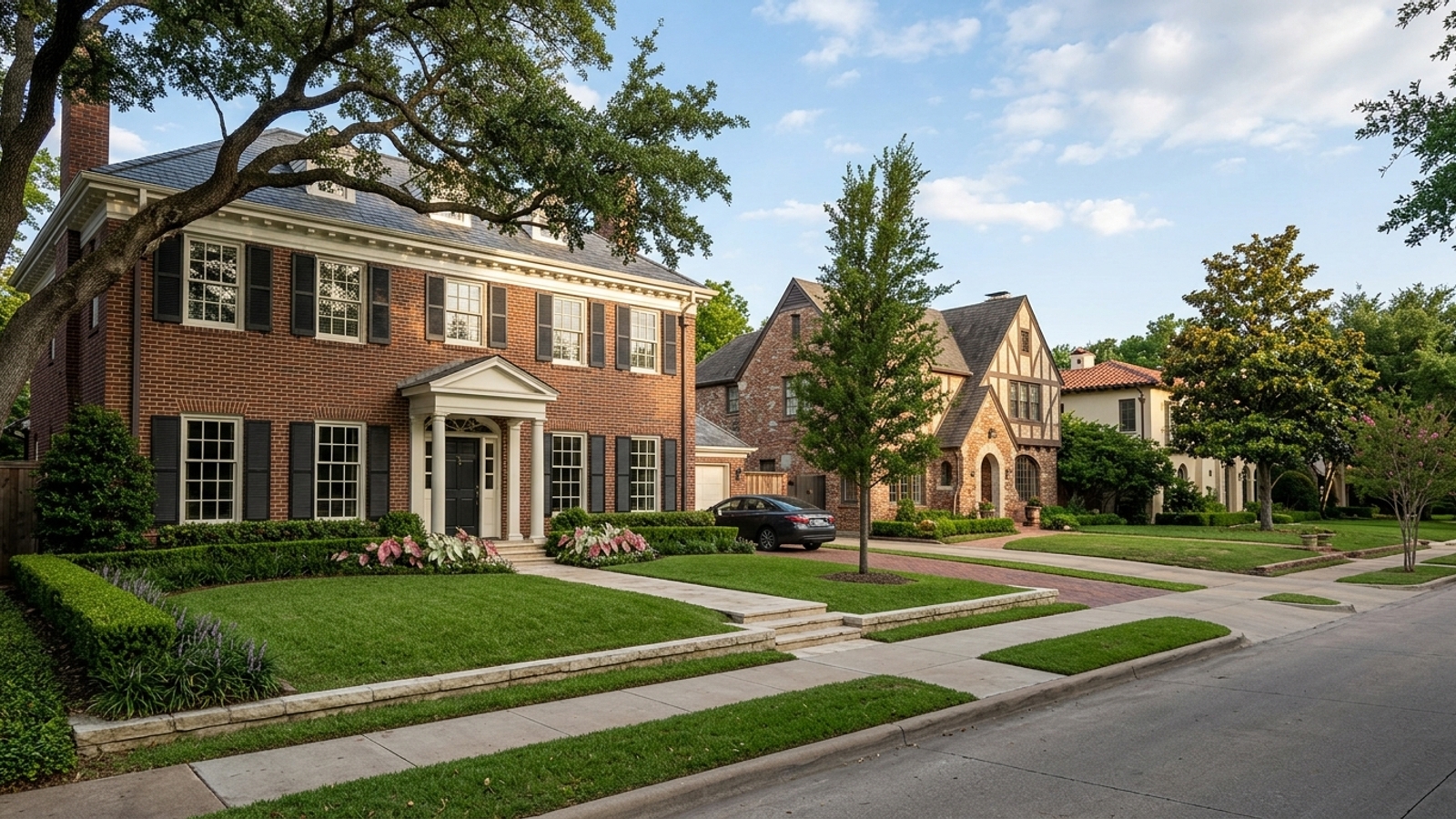
The median sale price for a home in Highland Park, TX is sitting right around $2,998,000. This is an ultra-luxury micro-market inside the Dallas Park Cities area, and it's not a place you want to walk into without a clear picture of your finances. This is especially true for first-time home buyers in Highland Park, TX. Homes here average about 50 days on the market, so you're not under a stopwatch, but you do need to know exactly what your monthly budget can handle before you start touring.
What it comes down to is your income, your existing debts, and the specific carrying costs attached to Dallas County real estate. Once you run the standard lender math against local tax rates and actual property values, you'll have a realistic number to work with.
How Lenders Calculate Your Affordability
Lenders lean on what's called the 28/36 rule. It's straightforward: no more than 28% of your gross monthly income should go toward housing costs, and no more than 36% toward your total debt payments. That's the ceiling they'll hold you to, and understanding it is how you figure out what you can borrow before you talk to anyone.
Finding Your Gross Monthly Income
Gross income is what you earn before taxes and deductions. For a salaried employee, that's just your annual salary divided by twelve. If you're earning $300,000 a year, your gross monthly income is $25,000. Under the 28% rule, your maximum monthly housing payment, principal, interest, property taxes, and insurance all included, caps out at $7,000.
Accounting for Your Current Debts
The second half of the equation is your debt-to-income ratio, or DTI. That's your proposed housing payment plus every recurring obligation you already carry: car payments, student loans, minimum credit card payments. At $25,000 a month in gross income, the 36% rule puts your total monthly debt ceiling at $9,000. If you're already sending $2,500 a month toward a car and student loans, your real mortgage budget drops to $6,500.
A Real-World Math Example for Highland Park
The median sale price here is roughly $2,998,000, and purchasing at that level requires you to understand every piece of the monthly payment, not just the principal and interest.
Put 20% down on a $2,998,000 home and your loan amount is $2,398,400. In Texas, the average 30-year fixed rate has recently been running between 7.13% and 7.35%. At 7.25%, the principal and interest portion of your payment comes out to roughly $16,360 per month. That's before you add a dollar of taxes or insurance.
Adding Dallas County Property Taxes to the Mix
Property taxes are where a lot of buyers in this price range get surprised. The median effective property tax rate in Dallas County is about 1.55%, notably higher than the national median of 1.02%.
On a home valued at $2,998,000, that 1.55% rate translates to roughly $46,469 in annual property taxes. Divide that by twelve and you're adding about $3,872 to your monthly payment. Your running total is now over $20,200 before insurance has entered the conversation.
Additional Ownership Costs to Factor In
Typical single-family homes in Highland Park don't carry mandatory HOA dues. Longtime local commentary confirms there are no HOAs in Highland Park or University Park, so if you're buying a single-family home, you won't be budgeting for association fees.
Your primary additional monthly cost is homeowners insurance. The premium varies based on the property and your coverage choices, and your lender will roll it into your total monthly housing payment.
Closing Costs and Ongoing Maintenance
Plan for closing costs in the range of 2% to 5% of the loan amount. On a multi-million dollar mortgage, the combined appraisal, title work, and origination fees can easily clear $50,000 before you get your keys.
Once you're in, maintaining a large luxury property isn't passive. Landscaping, HVAC service, general repairs: these require a steady cash reserve that lives entirely outside your mortgage payment. Build it into your budget before you make an offer, not after.
Ways to Expand Your Purchasing Power
With 30-year fixed rates in Texas currently running between 7.13% and 7.35%, landing at the lower end of that range matters. It directly reduces your monthly payment and shifts the maximum loan amount you can qualify for.
The two most reliable levers are paying down existing debt to lower your DTI and maintaining a strong credit profile. Lenders save their best rates for buyers who show up with clean credit histories and meaningful cash reserves.
Using Texas Down Payment Assistance Programs
The median price in Highland Park puts most assistance programs out of reach here, but buyers looking at more modest properties in the broader Dallas area may qualify. The Texas Department of Housing and Community Affairs (TDHCA) and the Texas State Affordable Housing Corporation (TSAHC) both offer programs providing 2% to 5% of the loan amount for down payments, with a minimum credit score of 620 and specific income limits. The Dallas Homebuyer Assistance Program offers up to $50,000 for homes purchased within Dallas city limits, provided the buyer meets all program guidelines.
Frequently Asked Questions About Highland Park Affordability
What is a good debt-to-income ratio for buying a house in Highland Park, TX?
Generally, 36% or lower. Lenders use that threshold to make sure your total monthly debts, including the new mortgage, aren't consuming too much of your gross income. Staying below it gives you the best shot at approval.
How do property taxes in Dallas County affect my monthly payment?
With a median effective rate of about 1.55% in Dallas County, a multi-million dollar property adds several thousand dollars to your monthly payment. Your lender will typically collect that amount through an escrow account.
Are there down payment assistance programs in Texas?
Yes. The TDHCA and TSAHC both offer statewide programs providing 2% to 5% of the loan amount in assistance. You'll generally need a credit score of at least 620 and must meet specific income limits to qualify.
How much annual income do I need to afford a median-priced home in Highland Park, TX?
It depends on your down payment and existing debts. Buying near the $2,998,000 median with 20% down and a 7.25% interest rate puts your monthly housing payment over $20,000, which means you'd generally need a gross annual income well over $850,000 to satisfy the 28% rule.
What hidden homeownership costs do buyers often overlook when budgeting for a house in Highland Park?
Closing costs are the big upfront hit, typically 2% to 5% of the loan amount. Ongoing maintenance and homeowners insurance require consistent budgeting too. The one thing you won't need to worry about for a single-family home here is HOA dues.
Should I pay off existing debts to increase my mortgage buying power in Highland Park, TX?
Yes. Paying down auto loans or credit card balances lowers your debt-to-income ratio, which frees up more of your monthly income for a mortgage payment and directly increases how much a lender will let you borrow.
Can I use local assistance programs to buy a home in Highland Park?
The multi-million dollar median price point typically puts most state and local assistance initiatives out of reach for this specific neighborhood. Buyers looking at more modest properties are much more likely to meet the strict income limits required for homebuyer programs in Highland Park, TX and the broader Dallas area.


